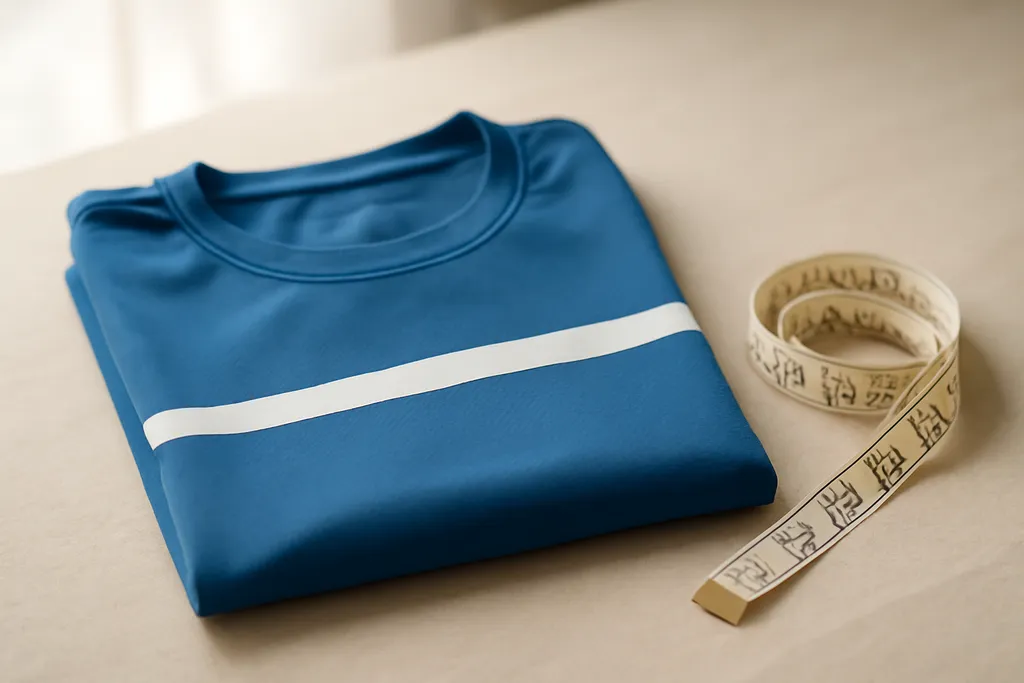
Start with a jersey you already own
Before checking any size chart, lay a jersey you already own and like flat, and measure its chest width (pit to pit) and length (collar to hem). Comparing those two numbers against a new listing's size chart is far more reliable than trusting labeled sizes alone, since cut varies significantly between brands and sports.
Sizing differs a lot by sport
Football and hockey jerseys are cut generously to fit over padding, so most fans size down from their usual shirt size for casual wear. Basketball jerseys depend heavily on armhole depth rather than chest width alone. Soccer jerseys, especially player-issue cuts, run slim — many fans size up. Baseball jerseys tend to sit closest to standard T-shirt sizing, though this varies between button-front and pullover styles.
Reading a size chart correctly
Always check the units (inches vs. centimeters) and whether the measurement is "chest width" (garment measured flat, doubled) or "chest circumference" (measured around the body) — mixing these up is one of the most common online sizing mistakes. When in doubt, chest width measured flat and doubled should roughly match your chest circumference measurement.
Browse our recommended gear
Our featured picks refresh periodically. While we update them, our editorial buying guides can help you find the right jersey.
See our buying guidesAccounting for how you'll wear it
If you plan to layer a hoodie or jacket underneath in cold weather, size up. If you want a cleaner, more tailored casual look, size to your body measurements rather than your usual shirt size, especially for sleeveless basketball jerseys.
Step-by-step sizing checklist
- Measure a jersey you already own (chest width and length) as your baseline.
- Check the specific size chart for the jersey you're buying — don't assume standard sizing.
- Adjust for sport: size down for football/hockey, size up for player-issue soccer, true-to-size for baseball.
- Consider how you'll wear it — layered, fitted, or oversized — before finalizing your size.
Editor's note: When between two sizes, choose based on how you plan to wear the jersey — sized down for a fitted casual look, sized up if you'll layer underneath.