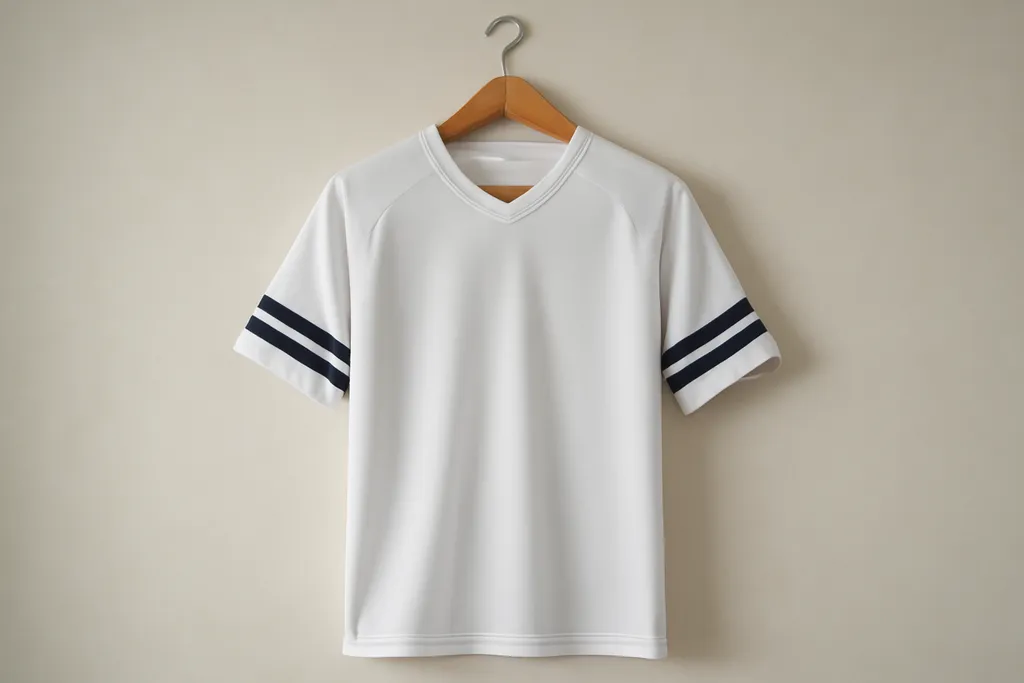
Standard sizing, sport by sport
Men's jerseys are the default sizing template most brands design around, but cut varies significantly by sport. Football and hockey jerseys run generously to accommodate padding underneath; basketball jerseys are sleeveless and depend heavily on armhole depth; soccer and baseball jerseys tend to sit closer to standard T-shirt sizing.
Choosing a fit that matches how you'll wear it
If you're buying primarily for game-day wear over other layers, a slightly roomier fit accommodates hoodies or jackets underneath in cold weather. If you want a cleaner, everyday casual look, sizing to your normal T-shirt size — or even down slightly for sleeveless basketball styles — usually looks better.
Fabric considerations across sports
Heavier double-knit fabrics (common in football and hockey) resist pilling and hold shape longest. Lighter mesh fabrics (common in basketball and soccer) prioritize breathability but show wear faster with heavy use. Baseball jerseys sit in between, typically using a smooth, mid-weight knit.
Browse our recommended gear
Our featured picks refresh periodically. While we update them, our editorial buying guides can help you find the right jersey.
See our buying guidesStyle options
Men's jerseys are available across all four common style categories: authentic (closest to on-field construction), replica (fan-friendly fit and price), vintage (heritage colorways and relaxed cuts), and custom (blank or personalizable options). Your choice mostly comes down to budget and how you plan to wear the jersey.
Quick tips
- Check sport-specific sizing before ordering — a size medium fits very differently across sports.
- Favor heavier fabric weights if you want a jersey to last multiple seasons of regular wear.
- Vintage styles often run more true-to-size than current on-field-inspired cuts.
Editor's note: When shopping across sports, always check the specific size chart for that jersey rather than assuming your usual size carries over.