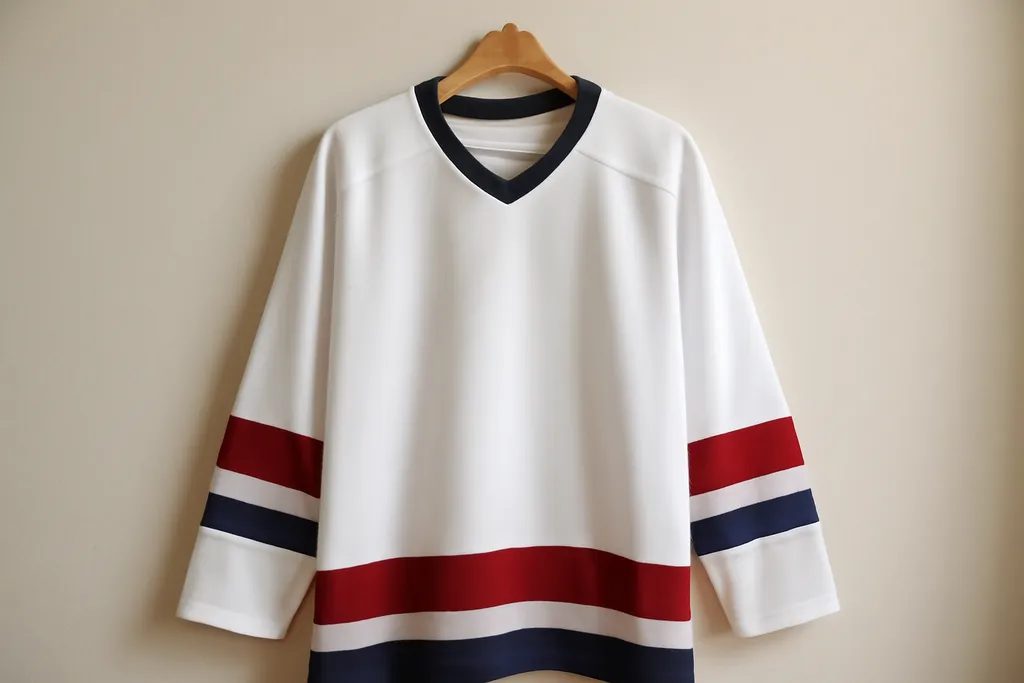
Why hockey jerseys run big
Hockey jerseys — often called "sweaters" — are cut to fit over shoulder pads and other equipment, so they run noticeably larger and boxier than jerseys from other sports. A fan buying a hockey jersey for casual wear should expect to size down, often by one to two sizes, compared to a standard T-shirt.
Fabric weight and warmth
Hockey jerseys are typically made from a heavier double-knit polyester than basketball or soccer jerseys, giving them more structure and warmth. This makes them comfortable for cold-weather wear off the ice, but also means they can feel warm indoors — something to factor in if you plan to wear one to an indoor game.
Authentic vs. premier vs. breakaway construction
Hockey jerseys are typically sold in multiple tiers, from lightweight "breakaway" fan jerseys to heavier "premium" and full on-ice "authentic" versions. Authentic-tier jerseys use a heavier fabric, fight strap, and reinforced underarm gussets for durability during play; breakaway jerseys prioritize a lighter, more affordable everyday fit.
Browse our recommended gear
Our featured picks refresh periodically. While we update them, our editorial buying guides can help you find the right jersey.
See our buying guidesLacing, fight straps, and other details
Some hockey jerseys include a small lace at the collar (a nod to traditional wool sweaters) and a fight strap at the hem to keep the jersey tucked in during play. These details are mostly cosmetic on fan-tier jerseys but are functional on authentic-tier versions.
Sizing and buying tips
- Size down from your usual shirt size — hockey jerseys are cut to fit over padding.
- Check the fabric weight description if you plan to wear the jersey outdoors in cold weather.
- Reinforced underarm panels and a fight strap are signs of higher-tier construction.
- Vintage-style hockey jerseys often use a lace-up collar detail for a heritage look.
Editor's note: When in doubt on hockey jersey sizing, check the chest-width measurement in inches rather than the labeled size — cuts vary more between hockey jerseys than almost any other sport.